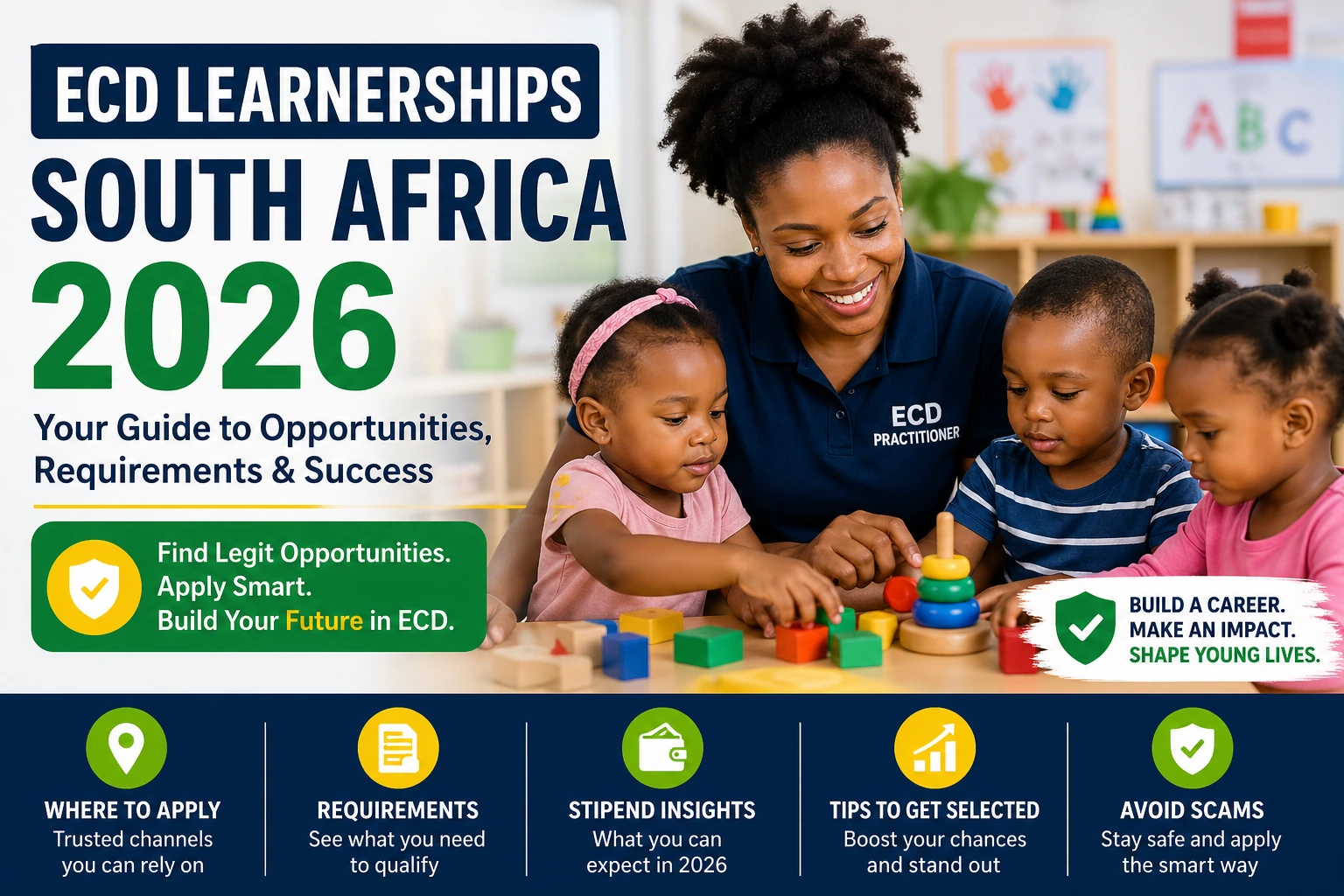
https://dailyseta.co.za/category/youth-learnerships/Early Childhood Development learnerships remain one of the most accessible ways for young South Africans to enter the education sector. These programmes combine structured training with real workplace experience, giving you both a qualification and practical skills that employers value.
But there is a reality many applicants overlook. While thousands apply every year, only a small percentage get selected. The difference is not just meeting requirements. It is understanding how the system works and applying strategically.
This guide will help you do exactly that.
What an ECD Learnership Really Is
An ECD learnership is a structured training programme that includes classroom learning and practical experience at a registered early learning centre. It is designed to prepare you for a career as an Early Childhood Development practitioner.
For example, the Occupational Certificate for ECD Practitioner registered under SAQA ID 97542 focuses on planning learning activities, supporting child development, and assessing progress in early learning environments .
These programmes are usually funded and delivered through accredited training providers working with Sector Education and Training Authorities.
Minimum Requirements for ECD Learnerships
While requirements vary depending on the programme, most ECD learnerships in South Africa require:
- South African citizenship
- Age 18 or older
- Unemployed status at the time of application
- Grade 10, 11 or 12 depending on the level
- Willingness to complete practical training
Many programmes prefer Matric, but some entry-level opportunities accept lower school levels .
You will also need:
- A certified copy of your ID
- A clear CV
- Certified school results
- Proof of residence in some cases
Where to Apply for ECD Learnerships in 2026
There is no single central website where all ECD learnerships are listed. Instead, opportunities come from a few key channels.
SETA Funded Programmes
Most ECD learnerships are funded through organisations like the Education, Training and Development Practices SETA.
These programmes are designed to build skills in the education sector and are delivered through accredited training providers .
Tip
Always verify that the provider is accredited before applying.
Government and Education Departments
ECD programmes in South Africa are aligned with national education priorities, and some opportunities are shared through provincial education departments or official platforms.
You can check updates on the official government portal
https://www.gov.za
Accredited Training Providers
This is one of the most important channels.
Training providers:
- Deliver the programme
- Manage applications
- Conduct selection
Before applying, confirm:
- The qualification being offered
- The accreditation status
- The application process
You can verify qualifications through the South African Qualifications Authority
https://regqs.saqa.org.za
TVET Colleges
Some Technical and Vocational Education and Training colleges partner with SETA funded programmes. These opportunities vary depending on the province and funding cycle.
NGOs and Community Programmes
Some non profit organisations run funded training programmes, especially in underserved communities. These can be legitimate opportunities, but they require careful verification.
Always confirm:
- The funding source
- The qualification offered
- The legitimacy of the organisation
Stipend Expectations in 2026
ECD learnerships are usually funded, which means you should not pay to apply.
Many programmes offer a monthly stipend to support learners during training. Some ECD programmes provide around R3000 per month, depending on funding and location .
However, stipend amounts are not fixed and must always be confirmed in the official programme advert.
Why Most Applicants Get Rejected
Understanding this is key to improving your chances.
Most rejections happen because of:
- Applying without understanding the programme
- Submitting weak or generic CVs
- Choosing the wrong qualification level
- Missing required documents
- Applying through unverified channels
ECD learnerships are highly competitive because they are accessible and funded. This means recruiters are looking for applicants who show readiness and commitment.
ALSO READ ABOUT: https://dailyseta.co.za/e-learning-learnership/
How to Improve Your Chances of Getting Selected
This is where you gain an advantage over most applicants.
Prepare a Strong Application
Make sure your documents are clear and complete:
- Certified copies must be readable
- Your CV must be simple and structured
- All required documents must be included
Show Genuine Interest in Childcare
Even if you have no formal experience, include:
- Volunteering experience
- Helping with children in your community
- Tutoring or mentoring
ECD programmes are looking for people who are genuinely interested in working with children.
Apply Strategically
Instead of applying everywhere, focus on:
- Programmes that match your qualifications
- Verified opportunities
- Strong, tailored applications
Quality matters more than quantity.
Verify Every Opportunity
Because scams are common, always check:
- Is the programme funded
- Is the provider accredited
- Are the instructions clear and professional
Avoid:
- Paying registration fees
- WhatsApp only applications
- Unverified social media posts
Be Ready for Practical Training
ECD learnerships require physical attendance and practical placement at a centre. If you cannot commit to this, your application may not be successful.
Who Should Apply
ECD learnerships are best suited for individuals who:
- Enjoy working with children
- Are patient and responsible
- Can follow structured routines
- Want to build a long term career in education
If you are only looking for quick income, this may not be the right path.
APPLY HERE: https://www.education.gov.za/Programmes/ECD/BanaPeleECDRegistrationDrive.aspx
Final Advice
Getting into an ECD learnership is not just about meeting the requirements. It is about showing that you are prepared, committed, and aligned with the role.
Most applicants focus on where to apply.
Successful applicants focus on how to stand out.
If you take the time to understand the programme, prepare your application properly, and apply through the right channels, you significantly increase your chances of being selected.
This is not just an opportunity to earn a stipend. It is a chance to build a meaningful career and make a real impact in your community.
FOR MORE OPPORTUNITIES VISIT: https://dailyseta.co.za/
What are the requirements for ECD learnerships in South Africa?
Most ECD learnerships require you to be a South African citizen, unemployed, and at least 18 years old. Depending on the programme, you may need Grade 10, Grade 11, or Matric. You will also need a certified ID copy, a CV, and your school results. Some programmes may require proof of residence and a clean criminal record, especially because you will be working with children.
Can I apply for an ECD learnership without Matric?
Yes, some ECD learnerships accept applicants without Matric, especially entry-level programmes aligned with NQF Level 3 or Level 4. However, having Matric can improve your chances, as many competitive programmes prefer it. Always check the specific requirements listed in the official application.
How much is the stipend for ECD learnerships?
ECD learnership stipends are not fixed and vary depending on the programme and funding. Many funded programmes offer a monthly stipend of around R2,500 to R3,500. However, you should always confirm the exact amount in the official advert before applying, as it can differ by provider and province.
Why do most ECD learnership applications get rejected?
Most applications are rejected due to avoidable mistakes such as submitting incomplete documents, using a generic CV, applying for the wrong qualification level, or not understanding the responsibilities of working in ECD. Competition is also high, so applicants who show genuine interest, preparation, and alignment with the role have a much better chance of being shortlisted.
How can I increase my chances of getting selected for an ECD learnership?
To improve your chances, focus on submitting a strong and complete application. Make sure your CV is clear and tailored to ECD, include any childcare-related experience such as volunteering or tutoring, and apply only through verified and accredited providers. It is also important to be ready for practical training, as most programmes require workplace placement at an ECD centre.

Nonhlanhla Nohiya is a dedicated South African career development writer and SETA-focused research specialist, best known as the voice behind Daily SETA. With a strong passion for youth empowerment and skills development, she has positioned herself as a trusted guide for learners, job seekers, and graduates navigating the complex landscape of Sector Education and Training Authorities (SETAs).
With years of hands-on research and content development experience, Nonhlanhla specializes in identifying verified learnerships, internships, and bursary opportunities across multiple industries—including business administration, IT, banking, and technical trades. Her work is rooted in simplifying access to SETA-accredited programmes, ensuring that readers not only find opportunities but understand how to qualify, apply, and succeed.
Authority & Expertise
SETA System Knowledge: Deep understanding of South Africa’s SETA framework, funding structures, and accreditation processes
Opportunity Curation: Tracks and verifies hundreds of active learnerships, internships, and bursaries annually
Career Guidance: Provides practical, step-by-step application advice including CV writing, document preparation, and interview readiness
Industry Insight: Covers emerging fields such as Artificial Intelligence, Cybersecurity, and Technical Support pathways within SETA programmes
Experience & Impact
Nonhlanhla has helped thousands of young South Africans access workplace-based learning opportunities by delivering accurate, up-to-date, and actionable information. Her content consistently highlights:
Real stipend ranges (R3,500 – R5,000+)
Entry requirements (Grade 10–12 and beyond)
Programme expectations and learner rights
Through her work, she actively contributes to bridging the gap between education and employment, particularly for underserved communities.
Mission
Her mission is simple yet powerful:To make career opportunities accessible, understandable, and achievable for every South African youth.