For thousands of young people across South Africa, the job search often follows a frustrating pattern.
You apply.
You wait.
You get rejected—again.
Not because you lack potential.
But because you lack experience.
It’s a cycle that leaves many feeling stuck—especially after completing matric or even a diploma or degree. And in today’s economy, that gap between education and employment can feel impossible to close.
But in 2026, a new type of opportunity is quietly gaining attention—and for good reason.
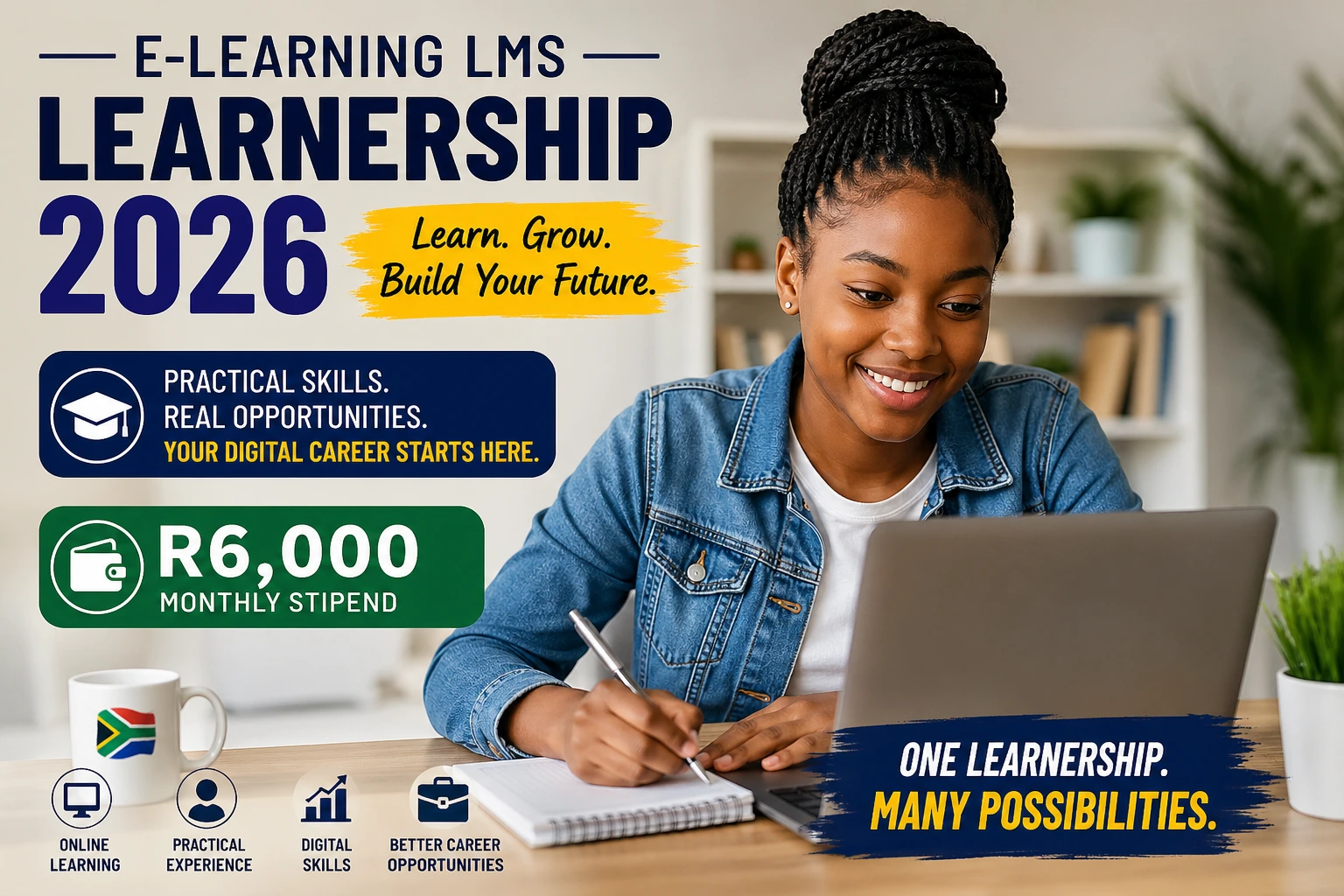
The E-Learning LMS Learnership 2026 is not just another training programme. It represents a shift toward practical digital skills, real-world exposure, and earning while you learn.
With a monthly stipend of around R6,000, it offers short-term financial relief. But more importantly, it gives something far more valuable: a realistic entry point into the digital job market.
Why This Learnership Is Getting So Much Attention Right Now
Digital transformation is no longer a future concept—it’s already here.
Across industries, companies are moving toward:
- Online training systems
- Remote work environments
- Digital collaboration tools
And this shift is creating demand for people who understand how these systems work.
That’s exactly where LMS (Learning Management System) skills come in.
Platforms like Moodle, Blackboard, and Canvas are now widely used in:
- Universities
- Corporate training departments
- Government programmes
- Private education providers
But here’s the problem:
Many organisations are adopting these systems faster than they can find people to manage them.
That gap is creating opportunity.
A Realistic Scenario Many Young People Relate To
Take someone like Thabiso, a 24-year-old from Soweto.
After completing a business administration qualification, he spent nearly a year applying for jobs—with no success. Most positions required experience with digital systems he had never used.
Then he applied for a digital learnership.
For the first time, he:
- Worked on real platforms
- Assisted users
- Learned how online systems operate in workplaces
Within months, he had something he never had before—practical experience he could actually put on his CV.
This is the kind of gap the LMS E-Learning Learnership is designed to close.
What Exactly Is the E-Learning LMS Learnership?
The E-Learning LMS Learnership is a structured programme that combines:
- Online learning modules
- Practical assignments
- Mentorship support
- Real-world system exposure
Instead of focusing only on theory, it teaches participants how to work with digital learning platforms used in real organisations.
By the end of the programme, learners are not just trained—they are workplace-ready at an entry level.
What You’ll Actually Learn (And Why It Matters)
One of the biggest advantages of this learnership is that the skills are practical and transferable.
Participants typically gain experience in:
1. Learning Management Systems (LMS)
You’ll learn how to:
- Upload and manage content
- Track learner progress
- Support users on the platform
These are core functions used in both education and corporate environments.
2. Basic IT Support Skills
You’ll develop the ability to:
- Troubleshoot simple system issues
- Assist users with login or navigation problems
- Understand digital workflows
Even basic IT support experience can significantly improve employability.
3. Digital Communication Tools
Modern workplaces rely heavily on:
- Email systems
- Collaboration tools
- Online meeting platforms
This learnership exposes you to how these tools are used professionally.
4. Data Handling and Administration
You’ll gain experience in:
- Managing user records
- Organising digital content
- Maintaining system accuracy
These skills are valuable across admin, HR, and training roles.
The Financial Support: Why the R6,000 Stipend Matters
For many applicants, the monthly stipend of around R6,000 is more than just a bonus—it’s essential.
It can help cover:
- Data and internet access
- Transport (if required)
- Basic living expenses
While it’s not a full salary, it makes it possible for learners to focus on building skills without zero income.
That alone makes these opportunities highly competitive.
Who Should Consider Applying?
This E-Learning learnership is especially suited for:
- Young people struggling to get their first job
- Graduates without practical experience
- Individuals interested in IT or admin roles
- Anyone curious about digital learning systems
- Job seekers looking to enter the tech space without coding
You don’t need advanced technical knowledge—just basic computer literacy and willingness to learn.
Minimum Requirements (What You’ll Likely Need)
While requirements may vary slightly, most programmes expect:
- Grade 12 (Matric)
- Basic computer skills
- Good communication ability
- Unemployed status
- Commitment to completing the programme
Meeting these requirements doesn’t guarantee selection—competition is high.
Apply here: https://setasite.co.za/where-to-apply-for-ecd-learnerships-in-south-africa-2026/
Why LMS Skills Are Becoming So Valuable
The demand for LMS-related skills is not random—it’s part of a much bigger trend.
Organisations are investing heavily in:
- Online training programmes
- Remote learning systems
- Digital employee development
According to global education insights from organisations like UNESCO, digital learning is playing a major role in expanding access to education worldwide.
Locally, institutions such as the Department of Higher Education and Training and the South African Qualifications Authority continue to emphasize the importance of skills aligned with digital transformation.
This means LMS knowledge is not just useful—it’s increasingly essential.
The Experience Gap: Why This Learnership Matters So Much
One of the biggest barriers to employment in South Africa is the “experience requirement.”
You’ll often see job posts asking for:
- 1–2 years of experience
- System knowledge
- Workplace exposure
But how do you get experience if no one gives you a chance?
That’s exactly the problem learnerships aim to solve.
By including:
- Real assignments
- System-based tasks
- Practical exposure
This programme helps you move from:
👉 “No experience”
to
👉 “Entry-level ready”
And that shift can make a huge difference in job applications.
Common Mistakes That Could Cost You This Opportunity
Many applicants don’t get selected—not because they’re unqualified, but because of avoidable errors.
Here are the most common mistakes:
- Submitting incomplete applications
- Using outdated or messy CVs
- Providing incorrect contact details
- Missing deadlines
- Ignoring application instructions
In a competitive process, small mistakes can eliminate your chances quickly.
How to Make Your Application Stand Out
If you want to improve your chances, focus on clarity and relevance.
Practical tips:
- Clearly list your computer skills
- Mention tools like Microsoft Word or Excel
- Include any online courses you’ve completed
- Add a short motivation statement
- Keep your CV clean, simple, and professional
You don’t need an impressive background—just a well-presented one.
Where Many Applicants Go Wrong Mentally
One overlooked factor is mindset.
Some applicants:
- Apply casually
- Don’t research the programme
- Treat it like “just another application”
But opportunities like this are often career-defining.
Taking the time to:
- Understand the programme
- Prepare properly
- Apply early
can significantly improve your outcome.
Career Opportunities After Completion
While the learnership does not guarantee employment, it can open doors to roles such as:
- LMS Support Assistant
- IT Helpdesk Support
- Digital Learning Administrator
- Training Coordinator
- Administrative roles using digital systems
These roles exist across multiple industries, including:
- Education
- Corporate companies
- Government departments
- Training providers
Also visit:
Long-Term Career Value: Why This Isn’t Just a Short-Term Opportunity
The real value of this learnership goes beyond the 12-month programme.
You’ll gain skills in:
- Digital systems
- Online platforms
- Remote collaboration
- Data handling
These are not temporary trends—they are core workplace skills for the future.
As more organisations digitize their operations, people with these skills will remain in demand.
How to Apply Safely (And Avoid Scams)
When applying, always:
- Use official websites or trusted platforms
- Avoid paying any application fees
- Double-check the source of the opportunity
- Verify details before submitting personal information
Scams are unfortunately common, especially around learnerships.
If something feels suspicious, it probably is.
Final Thoughts: Could This Be Your Turning Point?
For many young South Africans, the biggest challenge isn’t education—it’s access to opportunity.
The E-Learning LMS Learnership 2026 offers something different:
- A chance to gain real experience
- A pathway into the digital economy
- Financial support while learning
It may not guarantee a job.
But it can give you something just as important—a real chance to compete.
And in today’s job market, that can make all the difference.
If you meet the requirements, take it seriously. Prepare properly. Apply early.
Because sometimes, the opportunity that changes everything doesn’t look dramatic at first.
It looks like this.
Visit for more opportunities: https://dailyseta.co.za/
Is the E-Learning LMS Learnership 2026 paid?
Yes, the E-Learning LMS Learnership typically offers a monthly stipend of around R6,000. This financial support helps cover basic expenses such as internet data, transport, and daily living costs while you complete the programme. However, applicants should always confirm the exact stipend amount in the official application details.
Do I need IT experience to apply for the LMS Learnership?
No, prior IT experience is usually not required. The programme is designed for entry-level applicants, especially unemployed youth. Basic computer literacy—such as knowing how to use a computer, email, or Microsoft Word—can be helpful, but the learnership itself provides foundational digital skills training.
What skills will I gain from the E-Learning LMS Learnership?
Participants can gain practical, in-demand digital skills, including:
Using Learning Management Systems (LMS)
Supporting online learners
Managing digital content and records
Basic IT and system support
Communication and administrative skills
These skills are valuable across multiple industries, especially as more organisations move toward digital systems.
Can the learnership lead to a job after completion?
The learnership does not guarantee employment, but it significantly improves your chances. By completing the programme, you gain practical experience and skills that employers look for, which can help you qualify for entry-level roles in IT support, administration, or digital training environments.
Who is eligible to apply for the E-Learning LMS Learnership?
While requirements may vary depending on the provider, most applicants should:
Have a Grade 12 (Matric) certificate
Be currently unemployed
Have basic computer skills
Be willing to commit to the full programme
Meeting these requirements does not guarantee acceptance, so it’s important to submit a strong and complete application.

Nonhlanhla Nohiya is a dedicated South African career development writer and SETA-focused research specialist, best known as the voice behind Daily SETA. With a strong passion for youth empowerment and skills development, she has positioned herself as a trusted guide for learners, job seekers, and graduates navigating the complex landscape of Sector Education and Training Authorities (SETAs).
With years of hands-on research and content development experience, Nonhlanhla specializes in identifying verified learnerships, internships, and bursary opportunities across multiple industries—including business administration, IT, banking, and technical trades. Her work is rooted in simplifying access to SETA-accredited programmes, ensuring that readers not only find opportunities but understand how to qualify, apply, and succeed.
Authority & Expertise
SETA System Knowledge: Deep understanding of South Africa’s SETA framework, funding structures, and accreditation processes
Opportunity Curation: Tracks and verifies hundreds of active learnerships, internships, and bursaries annually
Career Guidance: Provides practical, step-by-step application advice including CV writing, document preparation, and interview readiness
Industry Insight: Covers emerging fields such as Artificial Intelligence, Cybersecurity, and Technical Support pathways within SETA programmes
Experience & Impact
Nonhlanhla has helped thousands of young South Africans access workplace-based learning opportunities by delivering accurate, up-to-date, and actionable information. Her content consistently highlights:
Real stipend ranges (R3,500 – R5,000+)
Entry requirements (Grade 10–12 and beyond)
Programme expectations and learner rights
Through her work, she actively contributes to bridging the gap between education and employment, particularly for underserved communities.
Mission
Her mission is simple yet powerful:To make career opportunities accessible, understandable, and achievable for every South African youth.